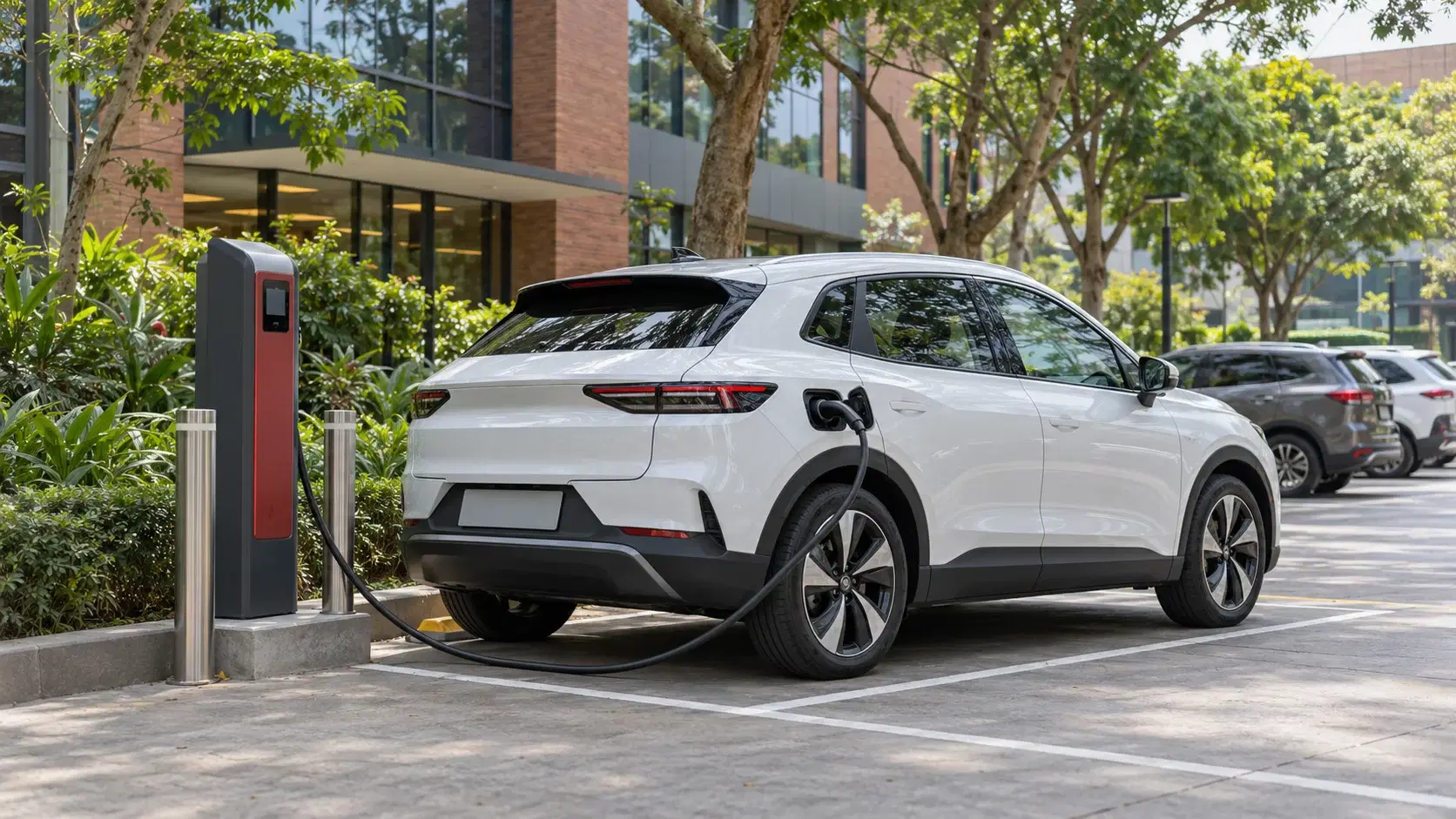
Retail host model
Charging can attract high-intent customers and create a modern sustainability signal when the site has access, power, safety, and dwell time.
- Malls and restaurants
- Hotels and resorts
- Fuel stations
- Hospitals and offices
Loading experience…
Turn footfall into charging demand
Partner with EHUB Charge to host EV charging at malls, hotels, restaurants, offices, hospitals, fuel stations, and high-dwell retail destinations.
A retail host can share site details, parking flow, electrical capacity, and expected EV footfall. EHUB Charge can evaluate charger mix, commercial model, branding, tariffs, payments, support, and deployment feasibility.
Designed for
EHUB Charge supports decision makers across India with answer-first content, transparent claims, and clear calls to action.
How it works
Charging can attract high-intent customers and create a modern sustainability signal when the site has access, power, safety, and dwell time.
The right model may be revenue share, lease, franchise, managed service, or a hybrid structure depending on investment and operations.
Revenue-sharing options
Customer dwell time
Branded station experience
Digital payment flows
Next step
Capture the details our team needs: name, phone, email, city, customer type, location type, parking slots or chargers needed, EV footfall estimate, message, and consent.
Partner enquiry
We review every enquiry for location fit, power readiness, customer type, commercial model, and deployment path.
Clear answers
EHUB Charge is building a planned, deployment-ready EV charging network for India with public charging, apartment charging, fleet charging, retail host partnerships, franchise models, solar, BESS, QR charging, UPI payments, and OCPP-compatible operations.
No. EHUB Charge presents itself as a planned and pilot-ready network built for national scale. Site availability, charger capacity, tariffs, and deployment timelines vary by location, permissions, utility approvals, and commercial agreements.
A driver scans the charger QR code, selects the connector or charging session, completes payment through UPI or supported wallet options, starts the session, and receives digital billing or invoice details after charging.